
Materials, use and what comes next.
Plant-based fibers in our Lyocell towels, useful everyday tasks and clear guidance for after use.
If you pay attention to what comes into your home, the small essentials deserve a look too. For our facial and kitchen towels, that starts with plant-based Lyocell fiber. Responsible use also means choosing the right task and knowing where the used product belongs.
Know your material
We choose plant-based Lyocell fiber for our facial towels and kitchen towels. You can explore the material close up and see the uses intended for each towel. A plant-based fiber alone does not establish a finished product's environmental impact or compostability.
Look at the complete item, including any backing or other layers, and read the instructions on its label.
Check local acceptance
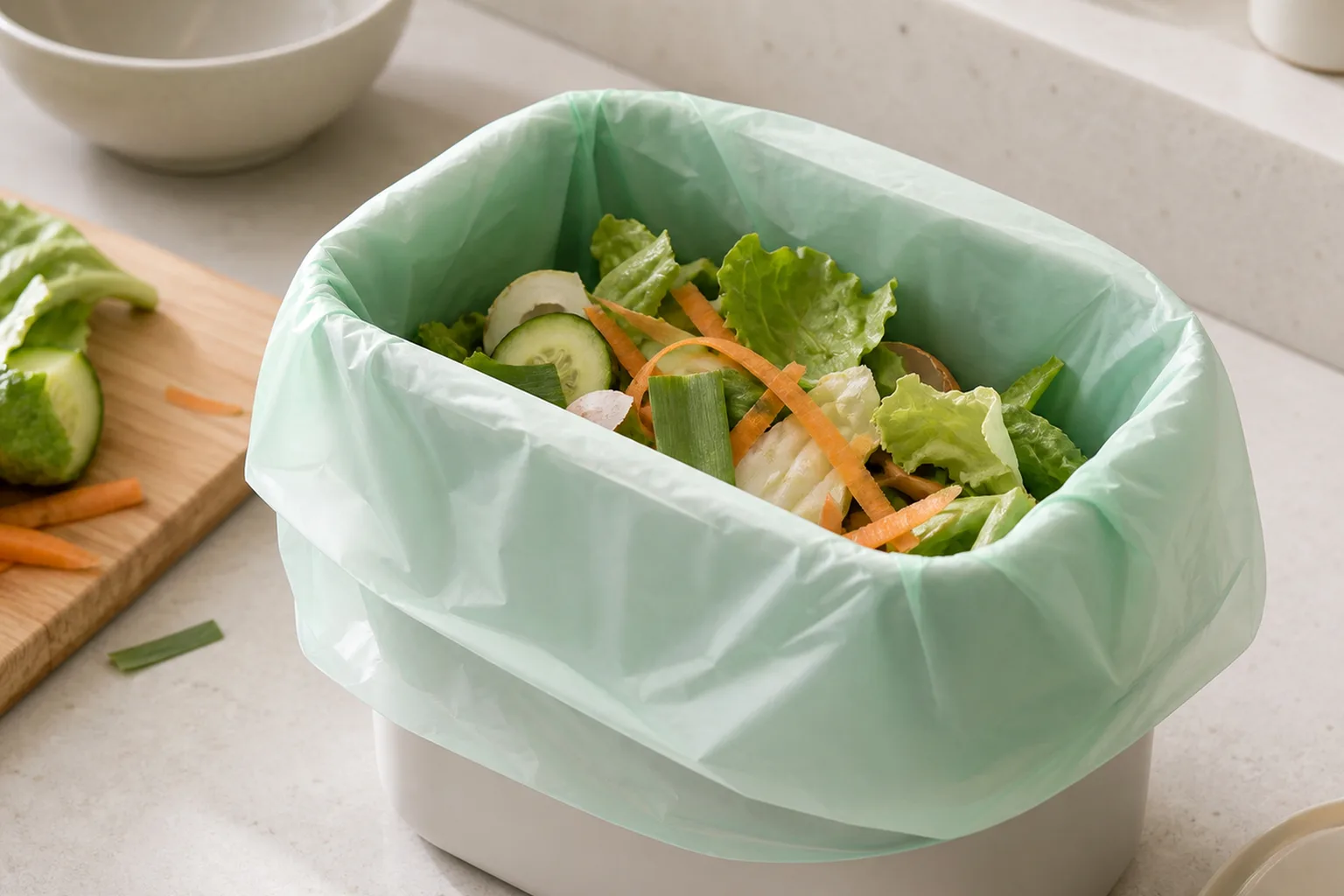
For food-scrap bags, check both the product label and your local collection service's rules. A facility may accept food scraps but reject particular types of liner.
Do not assume that a compostable liner is suitable for a home compost system. Acceptance and appropriate processing conditions depend on the exact product and service.
Keep disposables out of drains
Do not flush facial towels, kitchen towels, kitchen mats, food-scrap bags, laundry sheets or table covers. Follow product-specific guidance and local waste rules.
When the right route is unclear, ask your local waste service before placing an item in recycling or an organics collection bin.