
A closer look at materials.
Plant-based Lyocell, the EF-pattern surface and towel-matched mop heads: see how the details fit into everyday use.
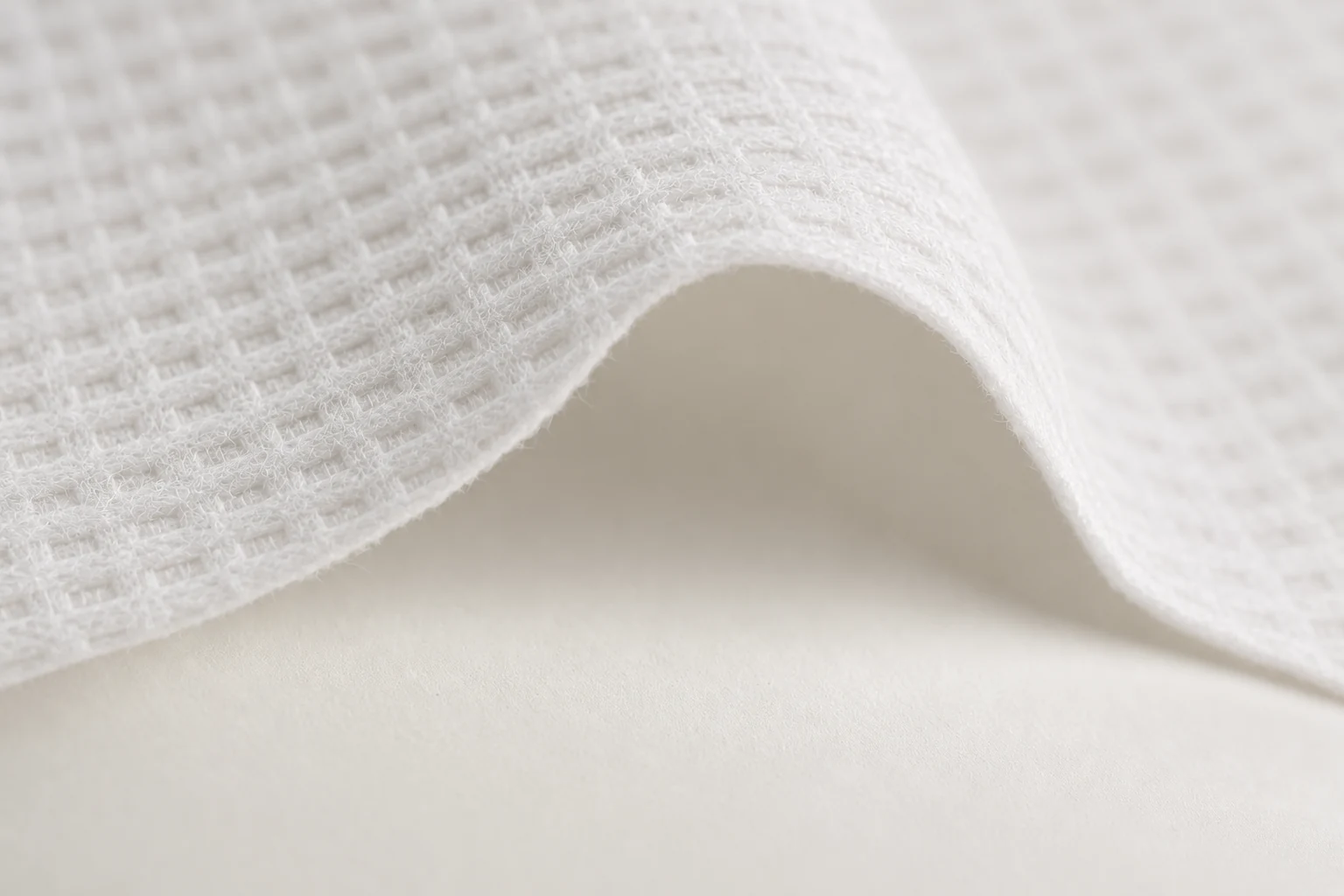
Look closely at a towel, then picture it beside your basin or on the kitchen counter. Material and construction are part of how a product fits the task.
Plant-based Lyocell
Our facial towels and kitchen towels use plant-based Lyocell cellulose fiber. Both have the distinctive EF-pattern surface: closely spaced rows of elongated recesses, separated by fibrous ridges.
The facial towel begins with face care; the kitchen towel is for household wiping. Each also fits its own mop head: Small for suitable bathroom walls, glass and floors; Large for floors. Follow the product guide and keep floor cleaning last.
A surface and a backing
Kitchen mats combine an absorbent working surface with a backing layer. Place the working side upward on a suitable flat area beside the sink or on a countertop.
The material layers serve different roles. Follow the guidance for your particular mat and the care instructions for the surface underneath. Keep it away from open flames and hot cookware.
Choose for the task
A food-scrap liner belongs in a suitable caddy. A laundry sheet belongs in the wash according to its instructions. A table cover belongs on a suitable table, away from direct heat.
For use, care and disposal, open the guide for the product you have. Material names alone do not establish a safety certification, a tested performance result or a disposal route.